


We often sense a quiet tension inside ourselves—a gap between what we think, what we feel, and what we do. How many times have we found our actions out of step with our deepest values? Or watched our emotions send our thoughts spinning in directions we didn’t want?To progress with self-understanding and create meaningful change, bringing thought, emotion, and action into harmony matters. In our experience, one-sided solutions rarely hold up. We believe that only through a truly integrative approach can we learn to move as whole beings—where our mind, heart, and hands point in the same direction.
Understanding the split: Why alignment matters
Many people have felt stuck because their minds want one thing, but their bodies act out another story. Imagine understanding something rationally—like knowing that forgiveness brings peace—while emotions keep you locked in anger, and your behaviors reflect avoidance instead. This disconnect happens in daily life, relationships, and even at work.
Harmony inside creates clarity outside.
When we work to align thought, emotion, and action, three changes happen:
- Our choices carry more meaning and coherence.
- We build resilience by reducing inner conflict.
- The sense of purpose guiding our lives becomes clearer and stronger.
True alignment allows us to act from a centered place, where all dimensions of our being participate in our decisions.
An integrative view: The system of self
From our perspective, each human is a system—not a sum of isolated thoughts, passing emotions, or raw actions, but a living interplay. Thought brings awareness and reflection. Emotion brings energy and connection. Action brings movement and learning. When disconnected, the system wobbles.
We view alignment as a process. It’s not about achieving some perfect state, but about learning to bring into dialogue the different parts in us.
- Thought allows us to see patterns and make meaning.
- Emotion motivates and colors our inner world, signaling our needs and values.
- Action grounds abstract ideas into lived experience.
Integrative methods are those that hold all three dimensions, creating change across the whole person rather than in pieces.
Principles of integrative alignment
Through years of studying and teaching, we have identified several guiding principles for methods that aim to align thought, emotion, and action:
- Awareness—Bringing attention to internal states before reacting outwardly.
- Dialogue—Creating an ongoing conversation between thinking, feeling, and doing.
- Consistency—Choosing actions that reflect our inner convictions.
- Feedback—Learning from both internal and external experience, and adjusting accordingly.
We have found that effective integrative methods invite us to inhabit a state of witness—neither ruled by automatic emotion nor frozen in intellectual analysis. Instead, the aim is flexible strength.
Methods in practice: Tools for daily alignment
What does this look like, in everyday reality? We offer some methods that we’ve seen produce meaningful shifts for individuals seeking to integrate mind, emotion, and action:

- Mindful pause: We set aside moments daily to pause and scan our inner state. What thoughts are present? What emotions? How is our body responding? This quick check grounds us.
- Reflective journaling: Writing about experiences has helped many of us notice patterns in our thinking and feeling—and how these link (or don’t) to our actions.
- Intentional breathing: Simple breathing practices help us center ourselves, especially when we’re emotionally stirred, making it easier for reason and feeling to meet before we act.
- Dialogue with self: In our experience, asking questions like “What value does this feeling point to?” or “Does this action express what I truly want?” creates inner movement.
- Role rehearsal: Before a challenging conversation or decision, we imagine acting in alignment. This mental practice often bridges the gap between our inner life and outer response.
With consistent practice, these methods begin to knit together what once felt fragmented inside us.
Going deeper: Working with mismatches
Even as we practice, there are moments when emotion, reason, and action stubbornly refuse to meet. Sometimes we feel one thing, think another, and do something else entirely. We believe this is not failure, but information.
Each mismatch is an invitation to deepen inner dialogue.
We’ve observed that to address these conflicts, integrative methods need to:
- Encourage honest self-inquiry about where the split is occurring.
- Identify underlying needs or beliefs driving contradictory choices.
- Allow healthy self-compassion—understanding that growth is a gradual, non-linear process.
One powerful method is to map out on paper three columns: What am I thinking? What am I feeling? What am I doing? Placing them side by side sometimes reveals hidden disconnections.
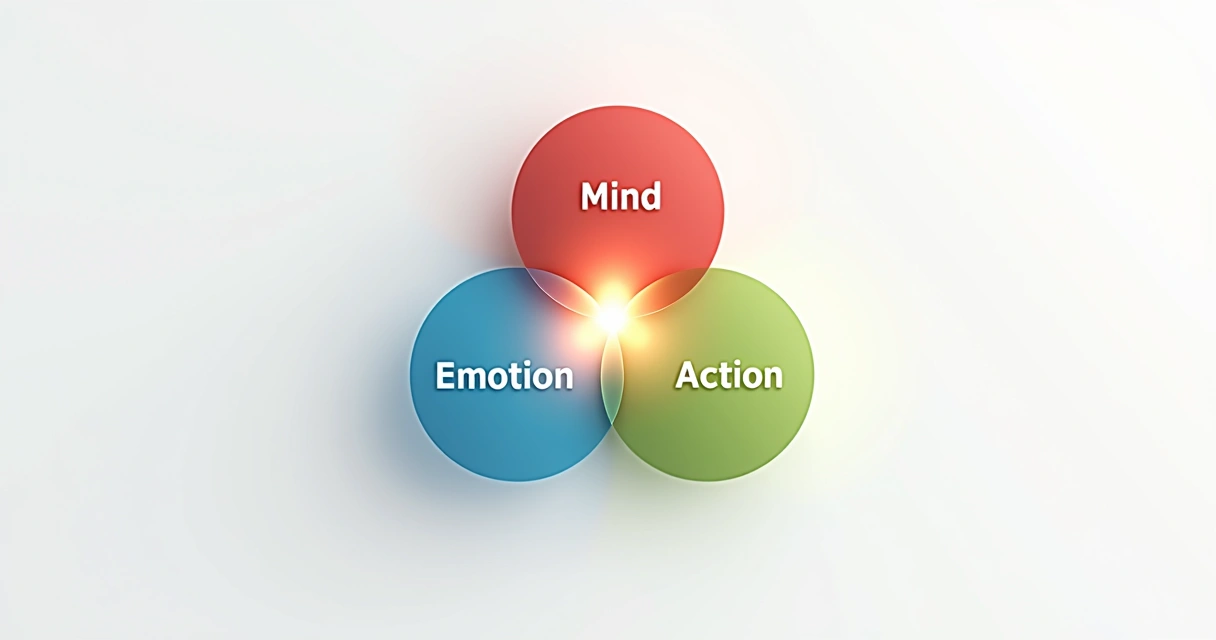
When misaligned, we gently ask: What would help these parts listen to each other, instead of pulling away? Often, it’s as simple as listening to what feels most urgent, and making time for small corrective actions—like speaking up, setting a boundary, or reaching out for support.
Integrative alignment for growth and connection
In our work, we see that alignment not only benefits the individual but ripples out into relationships and communities.
- Aligned individuals communicate more clearly, fostering trust.
- Conflicts become opportunities for shared learning, not just points of friction.
- Teams, families, and groups thrive when each member brings a congruent presence.
Alignment is visible—it shapes how we show up in the world.
We encourage regular, gentle review: Are our actions really expressing our values? Are our emotions and thoughts allowed their rightful place at the table? In this approach, success is not measured by perfection, but by movement toward greater wholeness.
Conclusion
Aligning thought, emotion, and action is a patient path. We have seen that with integrative methods, this journey is not only possible, but deeply enriching.
When we live with inner alignment, we move through the world with greater purpose, resilience, and peace.
Each small step we take toward listening inward and acting outward gives birth to more clarity, connection, and meaning in our lives.
Frequently asked questions
What is integrative alignment?
Integrative alignment is the process of bringing our thoughts, emotions, and actions into coherent relationship so that they support rather than contradict each other. It moves beyond focusing only on one part of ourselves, and instead, works to create harmony among all aspects of our being.
How to align thought, emotion, and action?
We recommend starting with increased awareness—taking time daily to notice your inner state before reacting. Practicing mindful pauses, reflective journaling, and intentional breathing helps create a bridge between thinking and feeling. Regularly asking yourself whether your actions reflect your true needs and values can guide adjustments and foster genuine alignment over time.
What are the benefits of alignment methods?
Methods for alignment bring clarity and reduce stress by minimizing inner conflict, support better decision-making, and greatly enhance a sense of purpose and satisfaction in life. They also improve communication and connection with others, as our actions become more consistent with our words and intentions.
Is it hard to practice integrative methods?
While integrative methods require practice and patience, we find that they are accessible to anyone willing to approach themselves with curiosity and kindness. The process is gradual—small steps and consistent attention matter more than quick fixes. Over time, the effort tends to bring increasingly positive results.
What are some simple alignment exercises?
Simple exercises include pausing for a minute to notice your current thoughts and feelings; writing down how your actions match or differ from your intentions; practicing mindful breathing when emotions run high; and regularly reviewing your choices to check for alignment with your core values. Even brief, daily moments of reflection make a noticeable difference over time.