
We like to think our teams are fair. Most people do. Yet bias rarely enters a room wearing a clear label. It appears in who gets interrupted, whose mistakes are remembered, and whose ideas need a second voice before they count.
Bias recognition in teams means learning to spot the patterns that distort judgment, trust, and shared decisions.
In our experience, the hardest part is not naming bias in theory. It is seeing it while a meeting is moving fast, a deadline is close, and everyone feels sure they are being reasonable. That is why a checklist helps. It slows us down just enough to notice what we miss in real time.
Research from a national survey on bias events in training settings shows how common these patterns can be. The survey found a median of three bias events per setting per year, with microaggressions making up 57% of reported events. Race or ethnicity appeared in 64% of cases, gender in 55%, and reporting outcomes were not consistently known by many leaders. We should read that as a warning. Bias is not rare, and weak follow-up makes it harder to correct.
What bias looks like in daily team life
Bias in teams is often subtle. A manager asks one person for data and another for vision. A calm voice is called thoughtful, while a similar tone from someone else is called detached. Someone with less status says the right thing, and the room stays quiet. Five minutes later, a senior person repeats it and gets praise.
Bias hides in normal routines.
We have seen this happen in hiring panels, project reviews, and even friendly brainstorms. People do not always mean harm. Still, impact matters. If a pattern keeps shaping who is heard, trusted, or advanced, the team pays for it in judgment and morale.
The checklist we can use before, during, and after team decisions
A good checklist is simple enough to use under pressure. We suggest moving through these points in sequence, especially when the decision affects hiring, promotion, evaluation, workload, or conflict.
1. Check who is speaking and who is not
Before we assess the quality of views, we should notice access to airtime. Silence is not always agreement. It may reflect rank, past dismissal, or fear of social cost.
Who has spoken more than once?
Who has not been invited in?
Whose comments were interrupted or redirected?
If we notice a gap, we can pause and ask for input from those who have had less space.
2. Check whether standards are changing by person
Teams often claim one standard while applying many. We may call one mistake a learning moment and another a sign of poor fit.
A bias signal appears when the same behavior is judged differently depending on who shows it.
Ask whether confidence, directness, caution, and warmth are being scored in the same way across people. If not, we should reset the criteria before moving on.
3. Check first impressions against actual evidence
First impressions are fast. They can also be sticky. We may decide that someone is sharp, difficult, reliable, or passive before the meeting is halfway done.
We can counter this by asking:
What facts support our view?
What are we inferring from style, accent, status, or similarity to ourselves?
Would we read the same behavior the same way in another person?
This step sounds basic. It is not. It often changes the whole tone of a discussion.
4. Check for pattern language
Some words tend to carry bias even when they sound neutral. Terms like “not leadership material,” “not polished,” or “not a culture fit” can hide vague discomfort rather than clear evidence.
When broad labels appear, we should ask for observable examples. What happened? When? In what setting? What was the effect? Vague language can make bias look objective.
5. Check whether disagreement is being personalized
Healthy teams disagree. Biased teams often convert disagreement into character judgment. A person becomes “hard to work with” after pushing back on a favored idea. Another becomes “strategic” for doing the same thing.
When critique shifts from actions to identity, bias often enters the discussion.
We should keep feedback tied to behavior, context, and clear expectations.
6. Check how errors are being stored in memory
Some people get one mistake attached to their name for months. Others receive quick forgiveness. This is a common team distortion. Recent errors, visible errors, and stereotype-confirming errors are often remembered more strongly.
It helps to ask for a fuller record. What has this person done well? What has improved? Are we weighting one event too heavily because it fits an easy story?
7. Check who gets the benefit of explanation
One of the clearest signs of bias is unequal curiosity. When a favored person underperforms, we ask what happened. When a less favored person does, we assume what it means.
Teams become fairer when we give the same chance for context to everyone. Context is not excuse. It is just part of accurate judgment.
How teams can make the checklist work
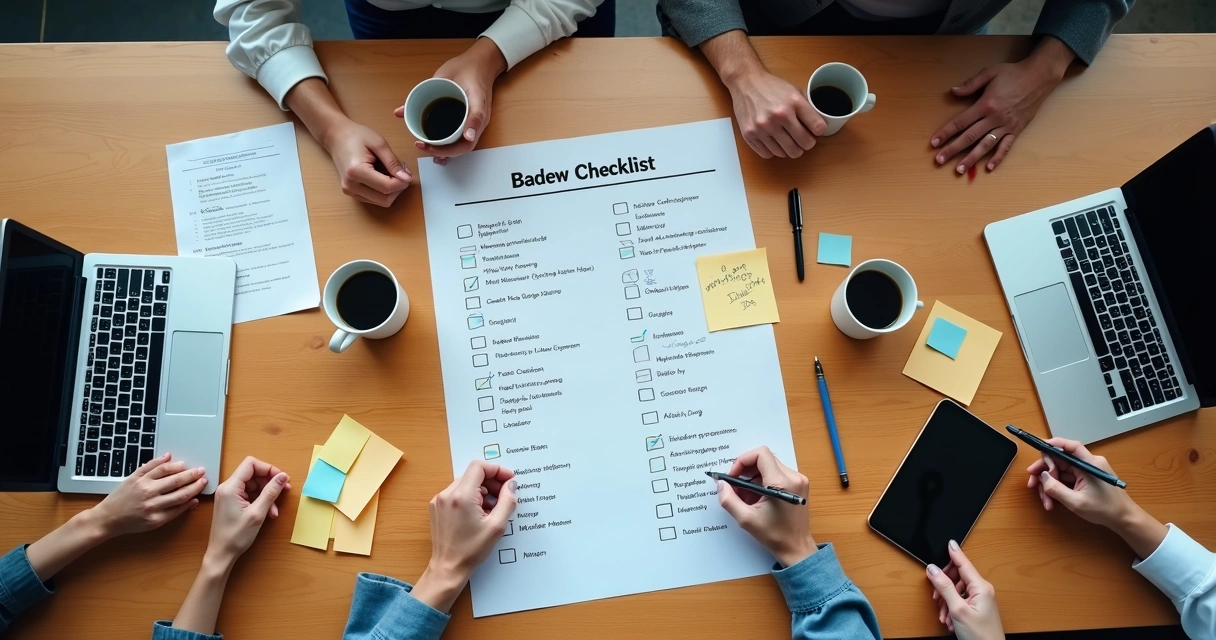
A checklist only helps if the team agrees to use it without defensiveness. We suggest assigning one person in each high-stakes meeting to watch for process, not just content. That role can rotate. It keeps responsibility shared.
We also think short debriefs help. After a decision, ask three things:
Did everyone have a fair chance to contribute?
Did we rely on evidence more than impression?
Did we document the reasons clearly?
That final point matters. When reasons are written down, teams are less likely to hide bias inside memory and mood.
What gets in the way
The biggest barrier is often self-image. Most of us do not want to see ourselves as biased, so we look for dramatic cases and miss the ordinary ones. Another barrier is speed. Fast decisions invite shortcuts. So does stress.
We have also noticed that teams confuse comfort with fairness. If a meeting feels smooth, people assume it was balanced. Not always. Sometimes the smooth meeting is the one where nobody challenged the hidden pattern.
Fair process can feel slower. That is a good sign.
Conclusion
Bias recognition is not about suspicion toward every choice. It is about better perception. Teams think more clearly when they test their own habits, question uneven standards, and separate evidence from assumption. A short checklist can do more than raise awareness. It can change how we listen, how we judge, and how we share power in the room.
If we want stronger team decisions, we should not wait for a major failure. We can start with the small signals today.
Frequently asked questions
What is bias recognition in teams?
Bias recognition in teams is the practice of noticing patterns that distort judgment between people. It includes spotting unequal treatment, unfair assumptions, and inconsistent standards during meetings, reviews, and shared decisions.
How do I use the checklist?
We can use the checklist before, during, and after a decision. Before the meeting, set fair criteria. During the discussion, watch speaking time, evidence, and language. After the decision, review whether the process was balanced and clearly documented.
Why is bias recognition important?
Bias recognition matters because teams make poorer judgments when hidden assumptions shape who gets heard, trusted, or rewarded. It also helps reduce repeated harm, including microaggressions, exclusion, and vague evaluation patterns.
Can this checklist improve team decisions?
Yes. A checklist helps teams slow down, compare people by the same standards, and test first impressions against facts. That usually leads to fairer discussions and more accurate choices.
What are common team biases?
Common team biases include affinity bias, where we favor people similar to us, confirmation bias, where we notice facts that support our first view, halo effect, where one strength shapes the whole judgment, horns effect, where one flaw does the same, and attribution bias, where we explain mistakes differently depending on the person.